
English| EUR
Suggested for you
More currencies
Choose a language
Ronda sits high in the Serranía, a climb of switchbacks above the Guadalquivir plain, and the rail network treats it accordingly. Anyone asking is there a train from Seville to Ronda deserves a straight answer rather than a timetable maze. This page sets out what Sevilla-Santa Justa offers, what it does not, and where to verify before committing to a plan.
Quick answer
There is no dependable direct rail link between the two cities, so this route is travelled by bus or car. Sevilla-Santa Justa, at Avenida Kansas City, 41007 Sevilla, is open 00:00–23:59 seven days a week, but the timetable board there points elsewhere. Renfe posts any current service at renfe.com; the line +34 912 320 320 confirms seasonal changes before you commit.
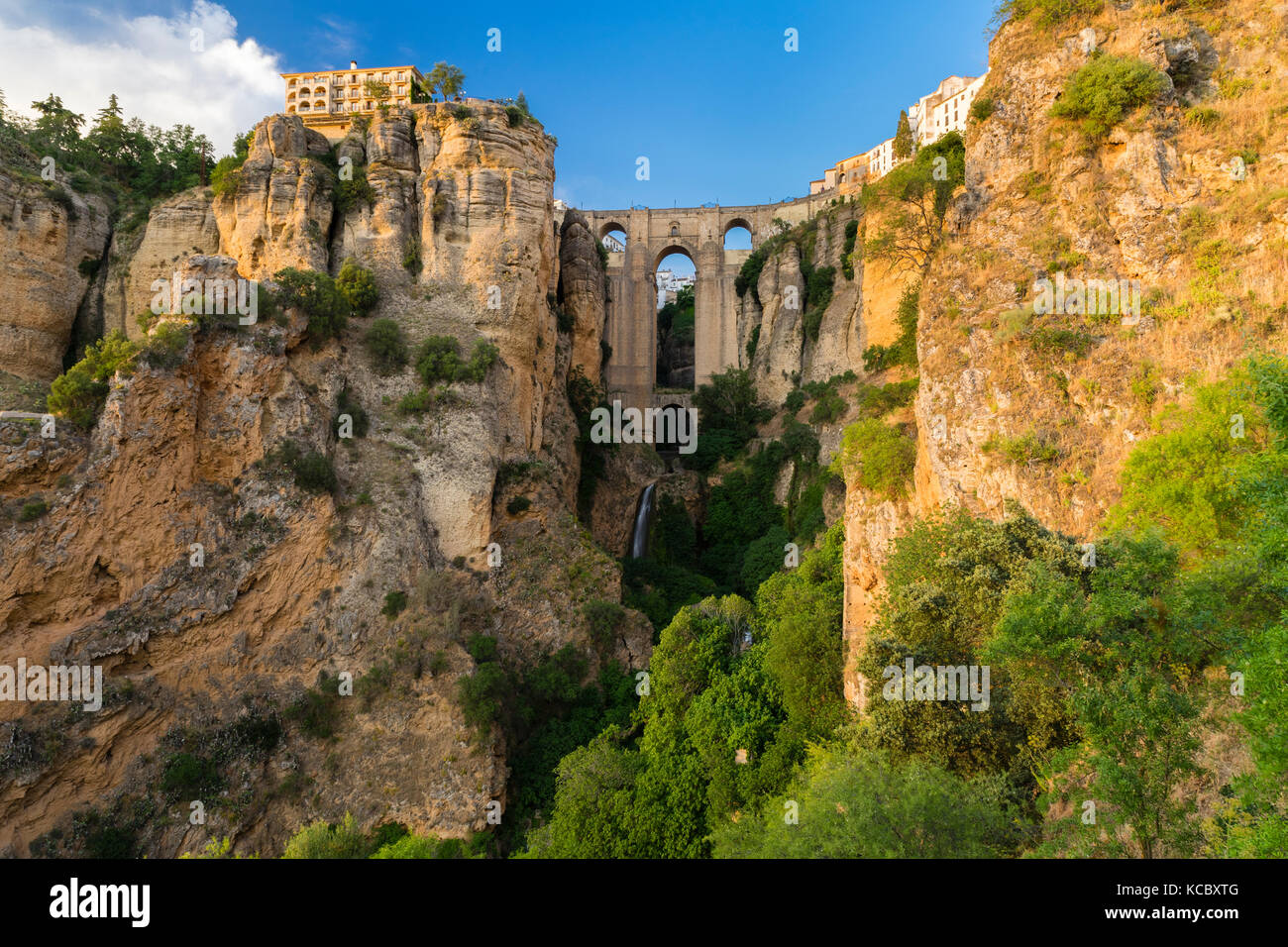
Ronda's railway was a British venture. The line that climbs into the Serranía was financed in the 1890s by the same interests that served Gibraltar, and it was surveyed to reach Algeciras and the Bay — not to shorten anyone's trip from the Guadalquivir plain. That century-old decision still governs the answer to "Is there a train from Seville to Ronda?" The rails through Ronda run east toward the Bobadilla junction and south toward the coast. Seville lies off to the northwest, on a different arm of the Andalusian network entirely. Sevilla-Santa Justa, on Avenida Kansas City in the 41007 district, is the city's main rail gateway and the natural place to test the theory. Its concourse operates around the clock, 00:00–23:59, seven days a week, so the constraint is never the building — it is the map. Renfe's Media Distancia services fan out toward Córdoba, Málaga and Cádiz, while the branch serving the white towns remains a separate proposition, stitched on only through Bobadilla. Travellers researching Seville to Ronda train times, or searching in Spanish for el tren de Sevilla a Ronda, tend to reach the same conclusion: the mountain town is a road destination. Renfe publishes anything current at renfe.com, and the information line, +34 912 320 320, settles seasonal questions quickly. What that means in practice is a gain rather than a loss. The mountain roads into the Serranía are the reason most visitors remember the journey at all, threading past Zahara de la Sierra, Grazalema and Setenil de las Bodegas — villages cut into limestone, whitewashed against the summer heat, several of them older than the province that administers them. A rail carriage would bypass every one. Arriving overland also delivers Ronda from above, so the Puente Nuevo and the sheer drop of El Tajo appear as they were meant to, from the rim rather than from a platform below the old town. Anyone still weighing "is there a train from Seville to Ronda" against a guided run through the white villages can treat the rail question as settled and plan around the road instead. The Ronda day trip from Seville has always been a road trip, and the route is the better part of it.
“The mountain town is reached by road, and the white villages in between are the reason that is no hardship.”
Ronda is located in the province of Malaga within the White Towns of Andalusia region. There is no direct train service between Seville and Ronda.
Damas bus line from Seville Prado de San Sebastian station
A-375 or A-384 roads
Renfe to stations such as Antequera-Santa Ana followed by bus connection
Best arrival window: 00:00–23:59 — There is no direct train; travel by bus or car is required for this route. Contact Renfe at +34912320320 or visit https://www.renfe.com for information regarding available rail connections to intermediate hubs.
This plan suits travellers making Ronda a single day trip from Seville, without rail service on the route. Allow a full 12-hour day door to door, with roughly five of those hours spent in transit.
Leave central Seville around 07:00 to reach Ronda by mid-morning; the journey runs about two and a half hours each way, so an early start protects your time in town.
Walk straight to the Puente Nuevo over El Tajo gorge, the sight most visitors come for. Allow 45 minutes including the viewpoints on both approaches.
Tour the Real Maestranza bullring and its museum, one of Spain's oldest. Budget an hour; audio guides add 15 minutes if you use one.
Descend to the Jardines de Cuenca for the bridge seen from below, then loop back up. About an hour, with a steep return climb.
Eat in the old quarter near Calle Armiñán. Ninety minutes covers a sit-down meal without rushing the afternoon.
Visit the Mondragón palace and its terrace over the valley, then wander Plaza Duquesa de Parcent. Around 75 minutes.
See the 13th-century Arab baths below the old town, or keep the hour spare for shops on Carrera Espinel.
Head back for a Seville arrival near 20:00. Ronda's attractions close well before evening, so there is little gained by leaving later.
Navigating the route to Ronda requires practical preparation since there is no direct train service available.
Purchase tickets via the Damas website in advance to guarantee your seat, especially during peak weekend travel times. Digital tickets are accepted, saving time at the station kiosk.
Public parking garages like the one beneath Plaza del Socorro are more reliable than street parking in the historic center. These facilities provide direct access to the main tourist areas.
If driving, plan to depart early to bypass traffic congestion on the narrow access roads leading into the town. Early arrival ensures better access to limited central parking spaces.
If traveling by bus, verify the luggage allowance on your specific operator's website before arriving at the station. Large items may require pre-registration or specific storage compartments.
When planning your day, ensure your bus or car arrival allows enough time to reach the Tajo gorge before sunset. Afternoon light offers clearer views of the bridge architecture.
Everything you need to know about is there a train from seville to ronda
No, there is no direct train service between these two locations. Travelers looking for a rail connection will find that no such route exists for this specific journey.
To reach the White Towns of Andalusia, most visitors rely on bus services or private car rentals. Exploring this region often requires flexible road transport to navigate the mountain terrain effectively.
No, there is no direct train from seville to ronda available for passengers. Renfe does not operate a line connecting these two specific Andalusian destinations.
The most reliable way to travel is by bus or car, as these road-based options provide the necessary access. Since is there a train from seville to ronda remains a common query, it is important to confirm that rail is not an option.
Because there is no service, you cannot book a ticket for a train from seville to ronda. You should instead look into bus schedules or guided excursion options for your visit.
No, public rail services do not connect these towns. You will need to utilize road transport to reach the landmark gorge and historical sites of the area.
Yes, bus lines and private road tours are the standard alternatives for those visiting the White Towns. Road travel is the only way to manage this transit between cities.
Since is there a train from seville to ronda is a frequently asked question, please note that a train is not possible for your day trip. You are encouraged to book a bus ticket or a tour instead.